Table Of Content
Stephanie (she/her) is the director of the Hearst Health Newsroom, where she writes, edits and oversees all health content for Good Housekeeping, Prevention and other Hearst titles. You may be tempted to if you see a whitehead on top of the red bump, but you should sit on your hands. After the infection has cleared, you may have a scar or discolored skin that can last for several months. A doctor may prescribe oral steroids, antibiotics, or other medications if the infection has a risk of becoming severe or spreading to the blood and internal organs.
Can You Prevent a Deep Ingrown Hair?
(Sorry to be a downer.) If you have pain, the bump gets bigger, and/or you notice other signs of infection (see below) and your symptoms don’t get better in a few days, you’ll want to get that sucker out. Of course you want a close shave, but if you’re prone to ingrown hairs, stick to a razor with two blades, max. “Each additional blade after two, the lower you cut or shave the hair,” Dr. Wechsler says, the greater the likelihood that the hair will curl back on itself before surfacing. Frequency of shaving is also a factor, says Dr. Lolis, who advises shaving less frequently. This single-blade razor from Oui the People was one of the Good Housekeeping Institute's top razor picks for 2023.
How do you treat ingrown hairs?
Popping an ingrown hair can increase you chance of it becoming infected. The results of electrolysis and laser hair removal are immediate. Apply a warm, moist — not dripping — washcloth for 10 to 15 minutes, three or four times a day.
What are the symptoms of ingrown hair?
However, they may also appear on other parts of your body, including your scalp, chest, back, abdomen, inside of your nose (nostril), eyebrows and buttocks (butt). Ingrown hairs don’t typically warrant a doctor’s visit, but if you have an infected ingrown hair, or if ingrown hairs become a chronic problem, then you should see your doctor. But now, let’s talk about how you can prevent these annoyances in the first place. As part of conventional ingrown hair treatment, your doctor may prescribe certain medications such as retinoids, steroid cream or antibiotic ointment for ingrown hairs. To get rid of ingrown hair cyst with a serious infection, he or she may also recommend a course of oral antibiotics.
After applying the warm compress, you can very gently exfoliate the skin that’s trapping the hair. This helps remove dead skin cells so the hair is more likely to emerge, Dr. Goldenberg says. To do this, the Mayo Clinic recommends gently rubbing a clean washcloth over the area in a circular motion for a few minutes.
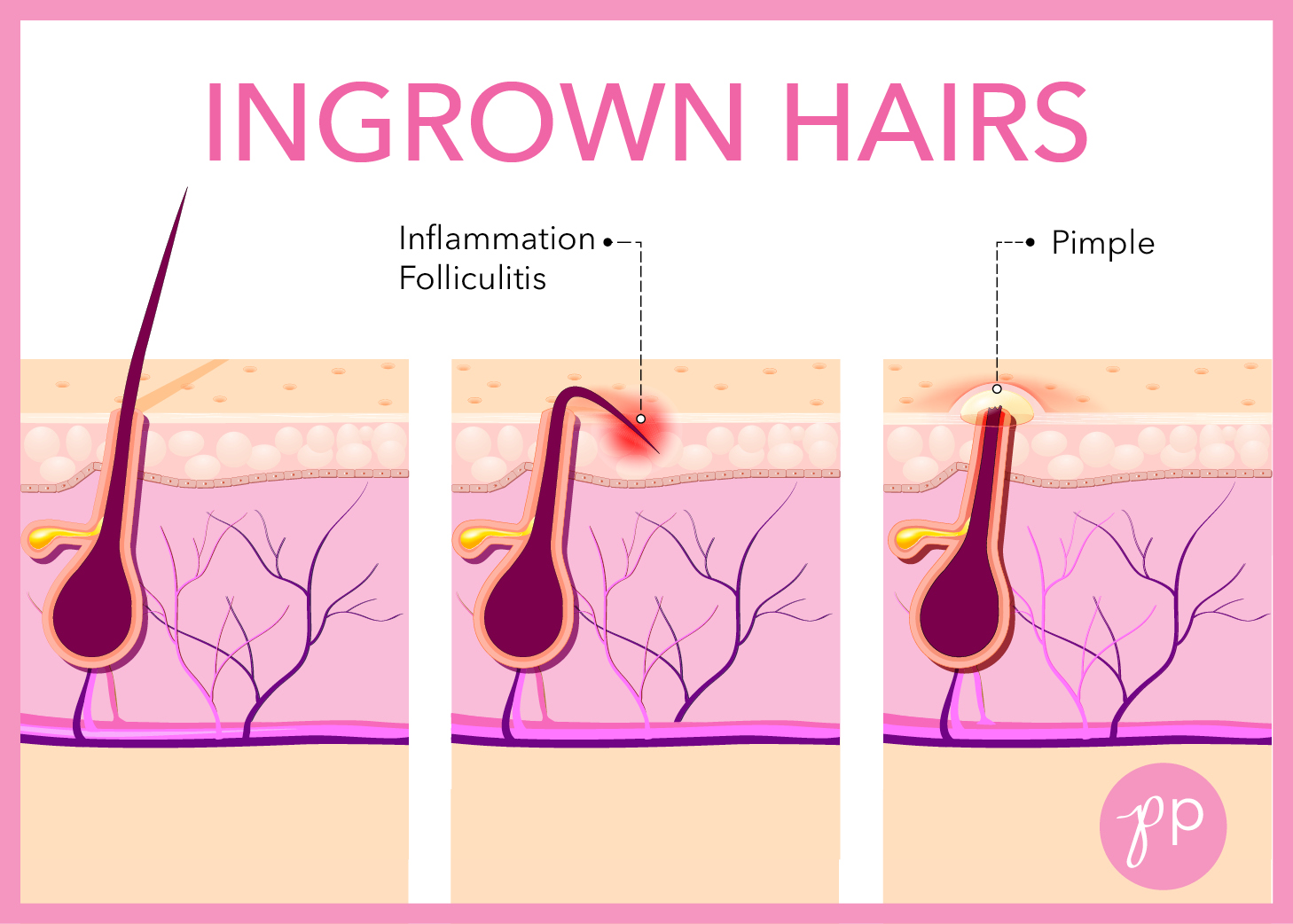
"Ingrown hairs often occur after shaving, tweezing, or waxing, and can be found in any area where hair grows, such as the face, legs, armpits, and pubic area," Engelman says. They happen when the skin blocks the emergence of a hair from the follicle, or when a hair grows back into the skin. Ingrown hairs are most common in areas of hair removal, such as the face, legs, armpits, and pubic region. They also occur more often in men who shave their beards. Shaving and waxing creates sharper hairs that tend to get trapped in the skin. Home remedies can often treat ingrown hairs, even if the affected area becomes infected.
Getting Rid Of Ingrown Hairs For Good
In the past, some dermatologists believed that single-blade razors reduced risk to the skin. However, a 2013 study showed no difference between single- and multiple-blade varieties. According to the Cleveland Clinic, dry brushes are an effective way to clean and rejuvenate skin. More specifically, dry brushes are great for removing dead skin cells. To use a dry brush, brush the skin with a firm, long bristled brush.
How to prevent and get rid of ingrown hairs, according to experts - CNN Underscored
How to prevent and get rid of ingrown hairs, according to experts.
Posted: Tue, 31 May 2022 07:00:00 GMT [source]
Medical Treatment
No, you should not try to pop or squeeze the affected area because not only can this damage your skin, but it can also result in an infection. Some OTC products may help coax the hair up and out of the skin, which may reduce the risk of infection. People with high levels of certain sex hormones can have more hair than usual. This can make you more likely to get ingrown hairs, especially after shaving. The content of this article is not intended to be a substitute for professional medical advice, examination, diagnosis, or treatment. You should always contact your doctor or other qualified healthcare professional before starting, changing, or stopping any kind of health treatment.
Practice good shaving techniques
People with curly hair are more prone to developing ingrown hairs than those with other hair types. Most ingrown hairs on men develop on the face where they shave, and for women, they most often occur on the bikini line. To act preventatively, make sure you're shaving in a way that's safe. First start by cleaning your skin with warm water and a good exfoliant to loosen your hair follicles beforehand. Then, use a fresh blade and shave in the direction of the hair growth, says Dr. Marmur. If the area is very inflamed and tender, your doctor may also inject a steroid into the skin, in order to reduce inflammation and provide quick relief.
For more help from our co-author, like how to use home remedies to remove ingrown hair, read on. Shave in the direction your hair naturally grows and rinse off the blade following each stroke. The more often you replace the blade, the less likely you are to experience cuts and irritations like ingrown hairs. Some experts also recommend using a single blade razor to discourage ingrown hairs, especially on the face. Always rinse your face (or other area of your body) and apply a natural moisturizer when you’re done shaving.
Shaving curled hair dry makes ingrown hairs even more likely. And while ingrown hairs can happen to anyone, they strike more often in people with naturally curly hair. Most commonly, they crop up in men's beards—but they can appear anywhere you might shave, including the scalp, armpits, pubic area, and legs.
The structure of the hair and direction in which they grow also play a role in ingrown hair development. For instance, tightly curled hair will have a curved hair follicle, which is believed to encourage the hair to reenter the skin once the hair is cut and starts to grow back. Exfoliating your skin removes a dead layer of skin cells and helps release ingrown hairs. Use warm — not hot — water and small, circular motions to wash your affected areas with a washcloth, exfoliating brush or exfoliating gel or scrub. In rare cases, your healthcare provider may use a sterile surgical knife with a thin blade (scalpel) to make a small cut in your affected areas.
It may also encourage the hair to burrow even deeper into the skin. Additionally, the best way to treat ingrown hairs is to avoid them in the first place. Yes, ingrown hairs can even show up on the scalp and face whether you're shaving there or not. To treat those, Dr. Marmur loves this pH-balancing spray toner by Tower 28. "It helps minimize any irritation from ingrown hairs and soothes sensitive, stressed skin," she says. The water-like consistency won't leave you feeling greasy, either.

However, if you notice that the ingrown hair becomes incredibly swollen, filled with pus, hot to the touch, or very painful, you should go to the emergency room as a serious infection may have taken place. Yes, some hair types are more prone to getting ingrown hair than others. According to dermatologist Dr. Ranella Hirsch, MD, hair that is curly or coarse is more susceptible because it’ll grow backwards and in different directions. Depending on the severity of the infection, it might still clear up on its own. To speed along the healing process at home, you can cleanse the area with gentle soap and water and apply a warm compress for 10 to 15 minutes, three times per day, Dr. Clay says.
“You can also consider using salicylic acid creams.” Dr. Lolis says, adding that products containing glycolic acid or lactic acid can serve the same purpose. If you do decide on self-surgery — again, a really bad choice, Drs. Wechsler and Lolis both emphasize — you can wind up with an infection.
Tweezing, especially along your bikini line, can lead to bumps too, since it can leave a fragment of hair under the skin surface and lead to inflammation, notes Dr. Frieling. We've all been there—you're admiring a silky smooth shave or wax job when suddenly, there it is. A red, raised, (often painful) bump, ruining the landscape of your otherwise flawless skin.


No comments:
Post a Comment