Table Of Content
Fill it out with your details and the specifics of what you need for your knife or sword. Then, mail it in with your item, and we’ll take care of the rest. “They restored a 30 year old knife for me and did an outstanding job. I couldn’t be more pleased with the quality of work and professionalism exhibited. Preservation focuses on maintaining the current state of the item, preventing further degradation. On the other hand, restoration involves bringing the item back to (or as close to) its original condition, repairing any damages or signs of neglect.
HDPE Knife Handle – Recycled Plastic Chef’s Knife Scales

Sand the ends of each pin with 80-grit sandpaper to help them enter the scale material more smoothly. After inserting them through the knife and scales, cut off any excess length and sand down the edge. If they’re longer and your fingers are slender, the handle diameter needs to be bigger to ensure a comfortable grip. If you’ll be using the knife outside and plan to wear gloves, go for a longer, more slender handle that your fingers can close around more easily. A good handle is made from quality materials, feels good in your hand, and lets you use the knife safely and efficiently.
Step 5: Give Finishing Touches
Allow the handle to fully cure or dry according to the instructions provided by the adhesive or epoxy manufacturer. Once the handle is attached, check for any excess epoxy or adhesive and clean it up using a cloth or solvent if necessary. You can sketch your design on paper or use a CAD software to create a digital representation. Ensure that the design includes ample space for your fingers to wrap around the handle comfortably.
Japanese wa handle design
I guess a lot of possibilities can be ruled in or out depending on the knife's intended use, be that a wall hanger to a field use knife. 3) Contoured and formed grips are great if they fit your hand, but the more form fit the handle, the fewer people it fits. They are nice if they fit your fingers, horrible if they do not.
Botanical Hand-Forged Knives Bring the Beauty of Outdoors to the Kitchen - My Modern Met
Botanical Hand-Forged Knives Bring the Beauty of Outdoors to the Kitchen.
Posted: Tue, 07 Aug 2018 07:00:00 GMT [source]
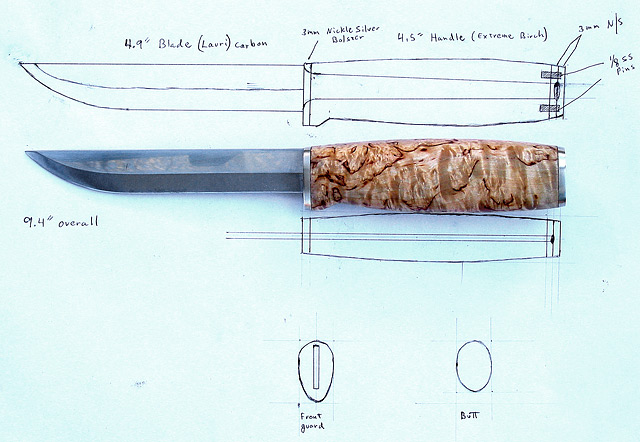
If your handle design includes finger grooves or other detailed features, use a compass or template to mark their positions accurately. We always think it’s so useful watching pros at work since we can always learn a lot from what they do – and if you agree, this is a video you should enjoy. In it, a professional knifemaker demonstrates how he made a handle for a customer’s knife – and these are techniques that any amateur knifemaker would do well to adopt. Before starting with your own knife designs, it can help to grind a few existing designs first or modify some existing designs slightly to make them your own.
We repair a variety of handle materials, from classic wood and bone to modern synthetics. Each handle is treated with care and precision, ensuring the balance and beauty of your blade is perfectly restored. With the measurements marked on the handle material, it’s time to start shaping the handle.
Apply a generous amount of epoxy to the tang and inside the holes of the handle. Wipe off any excess epoxy and use clamps or a vise to secure the handle tightly while the epoxy cures. With so many styles of knives on the market, there are endless varieties of handles available. Chances are if there’s a material you can think of, some knifemaker has probably tried using it for a knife handle.
Custom Craftsman Door Handle: Genuine Blacksmith Hand Forged Iron – HH2572
They may be carved with elaborate motifs, polished to a high gloss, or dyed to produce a range of colors and effects. No two handles are identical since each bone or horn component is unique. They provide a solid grip that can sustain hard use and are highly durable.
Preparing the Wood
Metal of just about any type is a great knife handle material for its toughness and long-lasting durability. It’s strong, can take a beating, and – in most cases – resists corrosion decently with a little maintenance and care. However, the biggest drawback to metal as a handle material is probably its lack of grip. Most everyday carry pocket knives that feature a metal handle are smooth and, therefore, increasingly difficult to handle the more moisture is introduced to the equation.
It’s a beautiful and unique addition, but it can be brittle and deform and crack over time, just like wood. Other, usually more expensive, but similar materials are mother of pearl or abalone – both of which come from sea creatures. This material is gorgeous, but not particularly practical for hard use as it is pricey and can scratch fairly easily. Most often, it will be wrapped around something else, like wood or metal. Chances are if you find a leather-handled knife, it is going to be a fixed combat blade or a bowie knife used for hunting.
Sanding not only helps in achieving a smooth and polished surface but also brings out the natural beauty of the handle material. Take your time during this step and pay attention to every inch of the handle. As you can see, there are loads of great plans to copy that show you how to make knife handles in a range of styles and from all kinds of materials. As the name of this video suggests, this is a tutorial aimed at knife-making novices.
Choose hardwoods noted for their strength and aesthetic appeal, such as walnut, maple, or oak. Ebony, cocobolo, and rosewood are exotic woods that may offer an excellent finish. Knife handles made of bone and horn are unrivaled for their air of vintage beauty.
Rough shaping the handle and then refining its shape is where your creativity and attention to detail will shine. With the use of rasps, files, and sandpaper, you can sculpt the handle to meet your desired design and ergonomics. Apply the chosen finish with a brush, following the manufacturer’s instructions.
Cattle bone is widely used due to its abundance and availability; it can be sourced from the leg bones of cattle and offers a smooth, ivory-like finish. Buffalo bone, known for its rich coloration and marbling patterns, provides a striking and distinctive look to handles. Deer antler handles, meanwhile, offer a rustic and textured appearance that appeals to many outdoor enthusiasts. Knife handle design is as important to the success of the finished knife as the design of the blade. When you use quality materials and get the shape and dimensions right, the result is a knife that will stand the test of time. Factors to consider when designing knives include handle shape, hand size, handle materials, knife uses, and handle dimensions.
Once you have chosen your handle material, ensure that it is of suitable thickness to accommodate the tang of the knife blade. The first step in making a knife handle is selecting the right material. The handle material not only plays a crucial role in the aesthetics of the knife but also determines its durability and comfort in use.
The procedures for making a knife handle out of bone or horn are the same as for other materials. Trace the handle’s outline onto the material first, then cut it out using a bandsaw or coping saw. Drill holes for the pins, then shape the handle to your preference using files and sandpaper. A thermosetting plastic resin is infused between layers of fabric, such as linen, canvas, or even paper, to create the composite material known as mica. It’s an excellent material for knife handles since it’s lightweight, strong, and water-resistant. Outdoor enthusiasts and cooks prefer Micarta because of its exceptional grip properties, particularly when wet.


No comments:
Post a Comment